
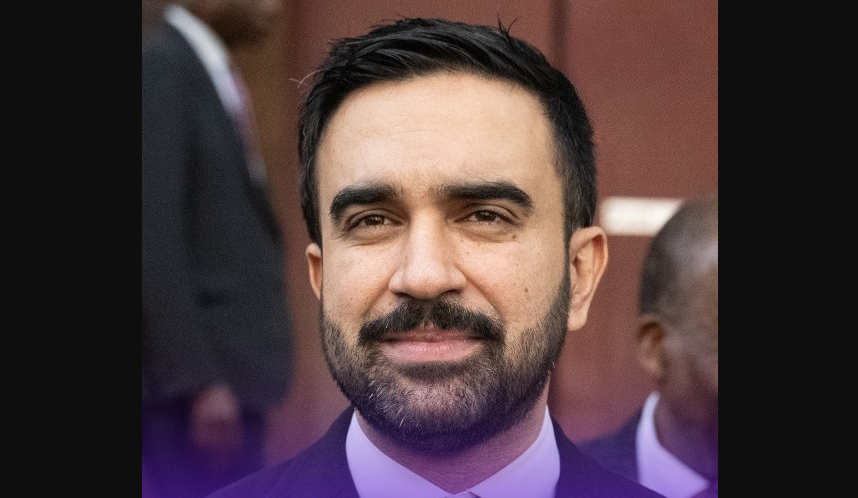
Zohran Mamdani, aged thirty-four, secured victory in the New York City mayoral election last month. His win marks a series of remarkable milestones for the city. Mamdani stands as the first Muslim to hold the office of mayor. He also represents the first individual of South Asian descent in this role. Furthermore, he arrives as the first mayor born on the African continent.
The official swearing-in ceremony remains scheduled for January 2026. Even so, an intriguing historical detail has emerged regarding the numbering of mayors. A longstanding discrepancy indicates that Mamdani might technically become the 112th mayor rather than the 111th. Historian Paul Hortenstine discovered this irregularity while examining past mayors and their connections to the slave trade.
During his meticulous research, Hortenstine learned that Matthias Nicolls, who served as the sixth mayor of New York, actually held the position on two separate occasions. Nicolls first took office in 1672 and returned for a second, non-consecutive term in 1675. In the same way that the United States counts separate presidential terms individually (such as Grover Cleveland being both the 22nd and 24th president), Nicolls’ second term deserves its own distinct place in the official sequence.
This overlooked second term created a ripple effect through centuries of record-keeping. Every mayor who followed Nicolls has carried a number that sits one position too low. The error traces back to a clerical oversight in a 17th-century archival document. Hortenstine has formally reached out to the mayor’s office with a detailed explanation and a request to amend the official list.
Interestingly, another scholar had already spotted the same anomaly decades earlier. In 1989, historian Peter R. Christoph published findings that highlighted the identical discrepancy. Christoph pointed out the peculiar situation in which ninety-nine consecutive mayors after Nicolls had inherited incorrect ordinal numbers. His work laid important groundwork that Hortenstine later confirmed through independent research.
The proposed correction carries no impact on Mamdani’s authority, policies, or the day-to-day governance of the city once he assumes office. City Hall will continue to function under his leadership exactly as planned. The change affects only the ceremonial and historical designation of the position.
City officials now face a decision about whether to adopt the corrected numbering in official publications, plaques, and future references. Some departments may choose to update records immediately, while others might retain the traditional sequence for continuity. Historians generally agree that accuracy strengthens public trust in institutional memory.
In the meantime, Zohran Mamdani continues preparations for his administration with focus and determination. He has assembled a diverse team of advisors and begun outlining priorities for housing, public safety, education, and climate resilience. Community organizations across the five boroughs express enthusiasm about representation that reflects the city’s rich mosaic of cultures and backgrounds.
This small historical adjustment has sparked widespread interest among New Yorkers who take pride in the city’s complex past. Residents now discuss the story in classrooms, on subway platforms, and at dinner tables. The revelation serves as a reminder that even long-accepted facts can benefit from fresh scholarly review.
When January arrives, Zohran Mamdani will take the oath of office on the steps of City Hall before thousands of supporters. Cameras will capture the moment that ushers in a new chapter for the nation’s largest city. Whether the program lists him as the 111th or 112th mayor, the significance of his leadership remains undiminished.
The footnote about Matthias Nicolls adds a touch of unexpected depth to an already historic inauguration. It illustrates how the past continually shapes the present in subtle yet meaningful ways. As New York moves forward under fresh leadership, this corrected detail honors both accuracy and the long arc of the city’s democratic tradition.
Zohran Mamdani’s journey to City Hall reflects years of grassroots organizing, legislative service in the State Assembly, and a vision rooted in equity and inclusion. The people of New York have chosen a leader who brings lived experience from multiple continents and a commitment to progressive change. The coming administration promises active engagement with every neighborhood, from the South Bronx to Staten Island.
History, in its quiet way, has offered one final gift to the incoming mayor: a more precise place in the long line of those who have governed the city. Whatever number ultimately appears beside his name, Zohran Mamdani steps into office ready to write the next chapter with boldness and purpose.