Most people reach for a pair of nail clippers automatically, without ever pausing to think about their design. They are one of those everyday tools that blend into routine, quietly doing their job without demanding attention.
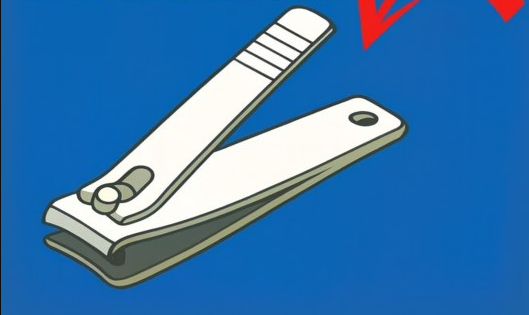
And yet, there is a small detail that nearly everyone notices at some point: a tiny round hole at the end. It often sparks a brief moment of curiosity, then gets dismissed as decorative or accidental. In reality, that small opening exists for a very specific reason. It has remained part of nail clipper design for decades, surviving countless changes in materials, shapes, and brands because it continues to solve practical problems in simple, effective ways. Once you understand its purpose, it becomes difficult to see nail clippers as an ordinary object again.
At its core, the round hole is about convenience and accessibility. Nail clippers are compact and lightweight, which makes them easy to misplace. They slip into drawers, vanish into toiletry bags, and hide at the bottom of backpacks with remarkable ease. By adding a small opening, manufacturers created a way for clippers to be attached to keychains, lanyards, zipper pulls, or metal rings. This turns a loose grooming tool into something that stays connected and visible. For people who travel frequently, commute daily, or keep grooming items in shared spaces, this feature significantly reduces the frustration of searching for a missing pair.
The usefulness of the hole does not stop at portability. Many people have found practical ways to incorporate it into home organization. Hanging nail clippers on hooks inside bathroom cabinets keeps them clean, dry, and easy to reach. Others store them on wall-mounted organizers or grooming stations, where everything has a designated place. In households with multiple family members, the hole can help separate personal tools or keep them grouped together without confusion. These habits may seem minor, but they streamline daily routines and reduce clutter.
Another advantage lies in control and precision. Some users slip a finger through the opening while trimming their nails, especially when working at awkward angles or dealing with thicker nails. This extra point of contact can improve grip and stability, helping guide the clipper more accurately. While not everyone uses the hole this way, it highlights how a single design element can support different needs depending on how the tool is handled. Small adjustments like this often make grooming safer and more comfortable.
The presence of this feature is not a modern innovation. Its roots stretch back to the late nineteenth century, when early grooming tools were designed for portability in a world without modern storage solutions. At that time, people carried personal tools in pockets, pouches, or travel kits, and losing them was common. The hole allowed clippers to be tied with string, leather straps, or metal loops, ensuring they stayed secure during travel or daily use. This practical solution proved effective, and over time it became a standard element rather than an optional one.
As manufacturing advanced, nail clippers evolved in many ways. Materials shifted to stainless steel. Shapes became more ergonomic. Springs and levers were refined. Despite these changes, the small round hole remained. Designers recognized that it added value without complicating the tool. It required no additional moving parts, increased durability, and did not interfere with the clipper’s primary function. Its continued presence reflects an understanding that effective design often relies on simplicity rather than novelty.
This tiny detail also offers a broader lesson about everyday objects. Many tools we use daily contain features shaped by years of observation and practical problem-solving. These elements often fade into the background because they work so well that we stop noticing them. The hole in nail clippers is one such feature. It quietly adapts to human behavior: the tendency to lose small items, the need for organization, and the desire for comfort and control.
The next time you pick up a pair of nail clippers, that small opening may stand out in a new way. It represents generations of thoughtful design condensed into a single circle. It proves that usefulness does not need to be loud or complicated. Sometimes, the most enduring features are the ones that quietly make life easier, day after day, without asking for recognition.