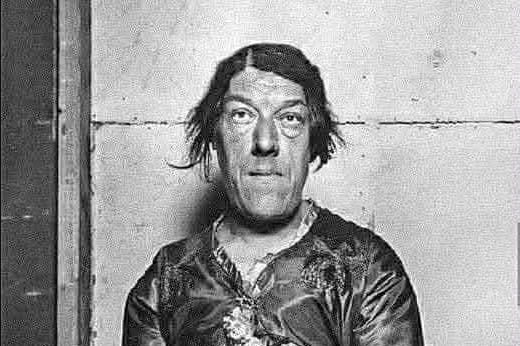
The life of Mary Ann Bevan began in a period very different from the world we recognize today, especially regarding how people responded to physical differences.
Born on December 20, 1874, in Plaistow, East London, Mary grew up to become a capable and dedicated nurse. She was known for a warm personality and a noticeable presence that many remembered fondly. Her early adulthood carried the promise of a stable and fulfilling future. That sense of hope expanded even more when she married Thomas Bevan in 1902, a union marked by affection and mutual respect. Together they welcomed four children and created a home filled with care and effort. Life shifted dramatically when Thomas passed away fourteen years later, leaving Mary responsible for raising their children during a time with limited assistance available for widowed mothers.
As Mary moved through her early thirties, she began to notice unsettling symptoms that slowly altered her facial features and the structure of her bones.
Medical knowledge at the time offered little clarity, and she lived without an explanation for the changes she was facing. In our world today, her symptoms are recognized as signs of acromegaly, a hormonal disorder caused by excessive growth hormone in adulthood. This condition can lead to the enlargement of hands, feet, and facial bones. In Mary’s lifetime, treatment did not exist, and her symptoms continued to progress with each passing year. The condition affected her appearance so significantly that she eventually lost her nursing position, a role she depended on to care for her family. Even with steady determination, the responsibilities of supporting four children alone became increasingly difficult.
During a moment of financial strain, Mary made the difficult decision to respond to an advertisement that sought individuals with uncommon physical characteristics for work in a traveling show.
Although the offer carried uncertainty and emotional weight, she chose to move forward because providing for her children remained her highest priority. Historical accounts from the show’s agent describe Mary not as the simplified figure that later public commentary tried to portray, but as a woman who carried strength, health, and dignity while facing circumstances outside her control. The job offered her enough income to support her children’s education and well-being, which mattered more to her than any discomfort she experienced. Over time, her image circulated widely, drawing public interest and leading to her performances at the popular Dreamland Circus in Coney Island.
Mary’s experiences eventually came to the attention of Dr. Harvey Cushing, a groundbreaking neurosurgeon who recognized the medical origin of her condition.
He spoke about her with empathy, emphasizing the reality of her medical struggle and encouraging people to view her story through a humane lens. His writings presented Mary as a mother striving to give her family stability at a time when options were limited. She continued working until she earned enough to secure her children’s schooling back in England, remaining focused on their future throughout her career.
Mary passed away at 59, and her wish to return to her homeland for her final rest was fulfilled by her family.
Today, Mary Ann Bevan is remembered not for outdated labels or public reactions from her lifetime, but for her unwavering resilience and her deep devotion to her children. Her life stands as a moving example of courage, love, and perseverance, qualities that continue to inspire many who learn about her journey.