A museum located in Las Vegas firmly disputes deeply troubling allegations raised by a mother from Texas. This devoted parent remains convinced that one of the plastinated cadavers displayed in the venue belongs to her deceased son. The heartbreaking assertion, which has gained renewed attention across various online platforms, has brought fresh focus to a painful, decade-long quest for clarity about a loss she has never managed to fully accept.
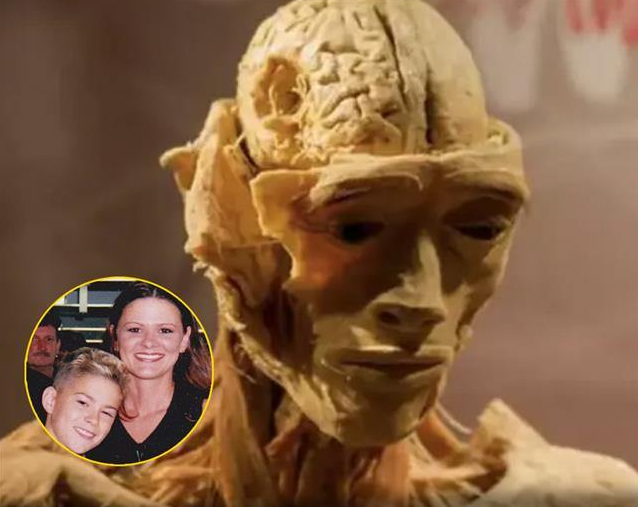
Kim Erick holds a profound belief that the earthly remains of her beloved son, Chris Todd Erick, who passed away in 2012 at the young age of twenty-three, ended up inside the renowned Real Bodies anatomy exhibition. Her lingering questions first emerged around the official account of his passing and grew significantly stronger the moment she encountered a seated, fully skinned figure presented under the name “The Thinker.”
Authorities discovered Chris lifeless inside his grandmother’s residence in Midlothian, Texas. Law enforcement officers determined that he experienced two consecutive heart attacks triggered by an undetected heart condition. His father and grandmother made arrangements for cremation shortly afterward, and Kim later received a memorial necklace that supposedly contained a portion of his ashes.
Kim explained that her unease intensified dramatically when she examined police photographs revealing bruises and unusual marks on his body. She interpreted these markings as possible indicators of restraint or harm inflicted before death. Despite her strong suspicions of foul play, investigators who reopened the case as a homicide probe in 2014 uncovered no supporting evidence, and the original cause of death remained unchanged.
In 2018, Kim attended the Real Bodies exhibition in person. During that visit, she grew absolutely certain that the specimen called “The Thinker” displayed a visible skull fracture closely matching the injury documented in Chris’s medical records. She further noticed that the precise area where her son once wore a distinctive tattoo appeared to have been carefully excised, deepening her conviction that the body on display belonged to him.
Kim repeatedly requested DNA testing on the specimen. Exhibition organizers consistently declined, explaining that the cadaver originated through legal channels in China and had appeared in public displays as early as 2004. Preserved archival images combined with the lengthy plastination process provided clear evidence that contradicted the timeline she proposed.
Her concerns escalated when museum staff eventually removed “The Thinker” from the Las Vegas location. Following that decision, Kim found herself unable to determine where the figure had been relocated. She described the sudden absence as deeply unsettling and said it strengthened her resolve to keep searching.
In 2023, news broke about hundreds of unidentified cremated remains discovered scattered across the Nevada desert. That revelation breathed new life into Kim’s longstanding fears and suspicions. Museum representatives along with law enforcement officials continue to uphold the extensive documentation that directly refutes her assertions. Nevertheless, Kim presses forward with unwavering determination, guided by profound maternal grief and an unshakable inner conviction that the full truth about her son’s fate remains hidden.
Every year that passes adds another layer to this mother’s enduring journey. She shares her story widely, hoping someone somewhere holds a missing piece of information that could finally bring peace. Online communities have embraced her account, offering support and amplifying her voice across social media channels. Documentary filmmakers and journalists occasionally reach out, drawn to the emotional depth of a parent refusing to let go until every question receives an answer.
The Real Bodies exhibition, created to educate visitors about the wonders of human anatomy, now carries an unexpected shadow for one family. Curators emphasize ethical sourcing and strict compliance with international regulations. They point to certificates, import records, and decades of exhibition history as proof that each specimen arrived through proper medical donation programs overseas.
For Kim Erick, however, documents and timelines offer little comfort when intuition screams that her child rests inside a glass case rather than in the urn she keeps close. She speaks softly yet firmly about the necklace she wears every day, wondering whether the ashes inside truly belong to Chris or whether they represent someone else entirely. The thought keeps her awake at night and propels her to continue contacting authorities, attorneys, and anyone willing to listen.
Grief, when mixed with unresolved mystery, can become a powerful engine. Kim channels that energy into advocacy, raising awareness about body donation transparency and the importance of thorough death investigations. She hopes her painful experience might one day prevent another family from enduring similar uncertainty.
While the museum maintains its position with calm assurance backed by paperwork and photographs, Kim Erick walks a different path—one lined with photographs of a smiling young man, medical reports, and an unquenchable need to know beyond any doubt where her son truly lies. The controversy surrounding “The Thinker” serves as a poignant reminder that science and emotion sometimes collide in ways no exhibition label can ever fully address.